

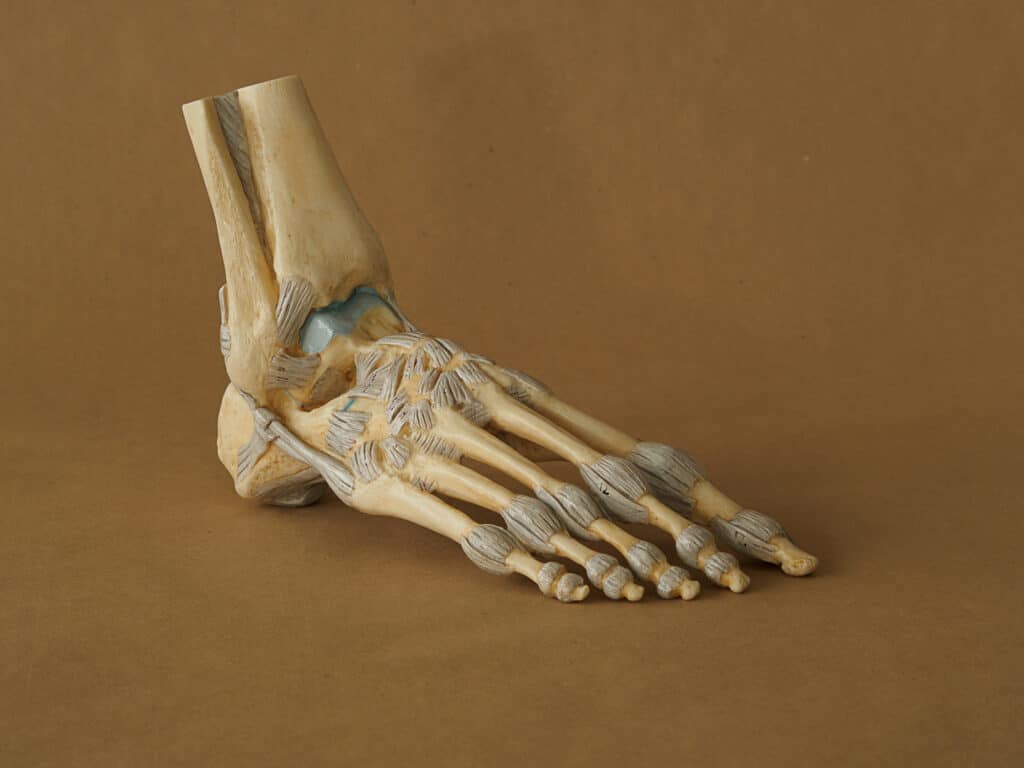
Your feet are remarkable structures. Each foot contains 28 bones (including the two sesamoid bones), 33 joints, and over 100 muscles, tendons, and ligaments working together to support your entire body weight and enable movement. When something goes wrong with this complex system, the effects can ripple throughout your body, affecting your knees, hips, back, and overall quality of life. If you’re dealing with persistent foot pain, heel discomfort, or mobility issues, you may have heard about Foot Mobilisation Therapy (FMT).
But what exactly is it, and could it be the solution you’ve been searching for?
The History and Evolution of Foot Mobilisation Therapy
Foot Mobilisation Therapy has a rich history spanning nearly a century. The technique originated in the 1920s when Dr John Martin Hiss, DO, MD, pioneered manipulative techniques for feet and ankles in North America. Working with a collaborative team of medical doctors, osteopaths, podiatrists, and chiropractors, Dr Hiss established clinics across the United States dedicated to treating foot pain through manual therapy.
Dr Hiss’ protégé, Dr Rue Tikker DPM, decided to work with Dr Hiss on graduation. Dr Hiss made young Rue an offer, ‘Stick with me for five years, and I will teach you everything I know and give you the practice’. Rue worked with Dr Hiss from 1957 to 1962 in his Los Angeles office before relocating to Napa Valley, where he still lives and was teaching up to the age of 95!

The technique was further refined by Dr Harvey Lampell, a student of Dr Hiss, who developed improved methods that combined podiatric biomechanical knowledge with manual therapeutic approaches from physiotherapy and chiropractic care.
In 1994, the modern era of FMT began when Ted Jedynak worked extensively with Dr Lampell, further refining the technique and introducing it to Australia and Europe. Ted has since become recognised as the master of Foot Mobilisation Technique, founding the Foot & Leg Centres in Australia in 2002 and training practitioners globally. His pioneering work has transformed the treatment of foot conditions, offering patients non-surgical solutions for persistent foot problems.
Expert Training at Unity Osteopathy
At Unity Osteopathy, Matthew Stewart has pursued advanced training in FMT with the world’s leading experts in the field. Having trained directly with Ted Jedynak and other specialists who have refined these techniques over decades, Matthew brings this expert knowledge and skill to patients in New Zealand.

This specialised training ensures that when you receive FMT at Unity Osteopathy, you’re benefiting from techniques that have been developed, tested, and refined over nearly 100 years of clinical practice. Matthew’s commitment to learning from the pioneers of FMT means you receive the highest standard of care, delivered by a practitioner who understands both the historical foundations and the latest advancements in this powerful therapy.
What Is Foot Mobilisation Therapy?
Foot Mobilisation Therapy is a specialised manual therapy technique designed to restore normal movement and function to the joints of the foot and ankle. Unlike treatments that simply address symptoms, FMT targets the underlying biomechanical causes of foot and lower limb problems.
Developed over several decades of clinical research, FMT involves the application of specific, gentle mobilisation techniques to restricted or misaligned joints in the foot. These hands-on techniques work to improve joint mobility, reduce pain, and restore proper foot mechanics.
The therapy is based on the principle that many foot problems stem from joint restrictions and misalignments that have developed over time. By carefully mobilising these joints and restoring their normal range of motion, FMT helps your feet function as they were designed to.
How Does Foot Mobilisation Therapy Work?
During an FMT session, your practitioner will use their hands to apply controlled, gentle movements to specific joints in your foot. These mobilisations are carefully graded according to your comfort level and are designed to:
- Restore normal joint alignment and position
- Improve joint range of motion
- Reduce muscle tension and soft tissue restrictions
- Enhance circulation and promote healing
- Retrain proper movement patterns
FMT is typically combined with specific exercises and, when appropriate, temporary foot taping or orthotic support to maintain the improvements achieved during treatment. This comprehensive approach helps ensure lasting results rather than just temporary relief.

What Conditions Can FMT Help With?
Foot Mobilisation Therapy has shown effectiveness in treating a wide range of foot and lower limb conditions, including:
- Plantar Fasciitis and Heel Pain – By addressing biomechanical factors that strain the plantar fascia, FMT can provide relief from this common and often stubborn condition.
- Bunions (Hallux Valgus) – FMT can help improve joint alignment and function, potentially slowing progression and reducing discomfort associated with bunions.
- Flat Feet and Fallen Arches – Treatment can help restore arch function and improve foot mechanics, reducing strain and fatigue.
- Ankle Instability and Sprains – FMT addresses joint restrictions that may develop after ankle injuries, helping restore stability and prevent recurrence.
- Achilles Tendinopathy – By improving foot and ankle mechanics, FMT can reduce stress on the Achilles tendon and support healing.
- Morton’s Neuroma – Mobilisation techniques can help reduce pressure on nerves in the forefoot.
- Metatarsalgia – Pain in the ball of the foot often responds well to joint mobilisation and improved foot mechanics.
- Arthritis in the Foot and Ankle – FMT can help maintain joint mobility and manage pain associated with arthritic changes.
Beyond these specific conditions, FMT can also benefit people experiencing knee pain, hip discomfort, or lower back problems that are related to foot dysfunction, as improving foot mechanics can have positive effects throughout the kinetic chain.
What Can You Expect During FMT Treatment?
Your first FMT session will typically begin with a thorough assessment of your feet, lower limbs, and walking pattern. Your practitioner will evaluate joint mobility, muscle function, and biomechanics to identify the specific areas contributing to your symptoms.
Treatment itself is generally comfortable, with most people describing the mobilisation techniques as a gentle, controlled movement of their foot joints. You might feel some mild stretching or pressure, but the techniques should not be painful.
A typical treatment plan involves regular sessions over several weeks, with the frequency gradually reducing as your symptoms improve. Many people notice some improvement after just a few sessions, though the full benefits of treatment typically develop over time as your foot mechanics improve and your body adapts to the changes.
Between sessions, you’ll likely be given specific exercises to perform at home to support your progress. Your practitioner may also recommend temporary taping or footwear modifications to help maintain the improvements achieved during treatment.
The Benefits of Choosing FMT
One of the key advantages of Foot Mobilisation Therapy is that it’s a conservative, non-invasive treatment approach. Unlike surgery, there’s no downtime, and unlike orthotics alone, FMT actively works to restore your foot’s natural function rather than simply supporting existing dysfunction.
FMT is also highly individualised. Your treatment is tailored to your specific foot structure, movement patterns, and symptoms, ensuring that you receive care targeted to your unique needs.
Perhaps most importantly, FMT aims to address the root causes of your foot problems rather than just managing symptoms. By restoring proper joint function and foot mechanics, the therapy helps create lasting change in how your feet work.
Is FMT Right for You?
Foot Mobilisation Therapy can benefit a wide range of people, from athletes looking to optimise performance and prevent injury to older adults seeking to maintain mobility and independence. It’s suitable for most ages and activity levels.
FMT may be particularly beneficial if you’ve tried other treatments without lasting success, if you’re hoping to avoid surgery, or if you’re looking for a treatment approach that addresses the underlying causes of your foot problems rather than just the symptoms.
As with any treatment, FMT may not be suitable for everyone. Certain conditions, such as active infections, fractures, or specific medical conditions, may require alternative approaches. A thorough assessment will help determine whether FMT is appropriate for your situation.
Taking the Next Step
If you’re struggling with foot pain or dysfunction, you don’t have to simply accept it as a normal part of life. Foot Mobilisation Therapy offers a proven, evidence-based approach to restoring foot function and reducing pain.
At Unity Osteopathy, we’re committed to helping you understand your foot health and providing treatments that make a real difference to your mobility and quality of life. If you’re interested in learning more about how FMT could help you, we’d be happy to discuss your specific situation and whether this approach might be right for you.
Your feet carry you through life—they deserve expert care. Contact us today to book an assessment and take the first step toward healthier, happier feet.


