

At Unity Osteopathy, we honour the pioneering work of osteopathic physicians who expanded our understanding of the body’s innate healing capacity. Dr Robert C. Fulford (1905-1997) was one such visionary, developing an approach to treatment that combined gentle manipulation with an innovative tool—the percussion vibrator, commonly known as the Fulford percussor.
Who Was Dr Robert Fulford?
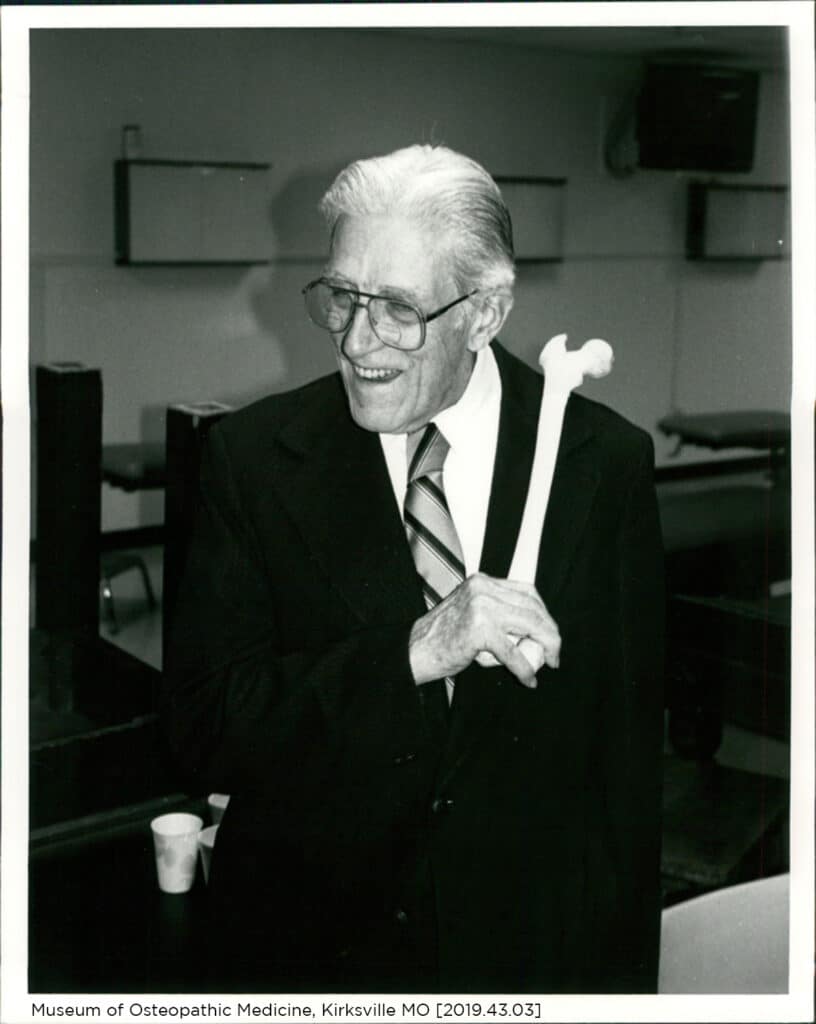
Dr Robert Fulford was an osteopathic physician who practised for over 50 years and became renowned for his remarkable healing outcomes. Born in 1905 in Cincinnati, Ohio, he graduated from the Kansas City College of Osteopathy and Surgery in the late 1930s. During his training, he became fascinated with Dr William Garner Sutherland’s cranial concept – the understanding that subtle rhythmic motions exist throughout the body’s structures and are essential to health.
Throughout his career, Dr Fulford synthesised knowledge from diverse sources, including osteopathic principles, New Thought philosophy, and energy medicine research. This multidisciplinary approach allowed Fulford to develop treatment methods that addressed not only mechanical restrictions but also the body’s vital energy systems.
Understanding the Fulford Approach
The Life Field Philosophy
Central to Dr Fulford’s work was his understanding of the “life field”—an electromagnetic energy field that surrounds and permeates the physical body. He believed this field conveys vitality to the body, sustaining and empowering physical health. Drawing from both osteopathic philosophy and contemporary energy medicine research, Fulford taught that blockages in these streams of vital energy lead to dysfunction and illness.
This concept aligned with A.T. Still’s original vision of osteopathy—that the body possesses inherent self-healing mechanisms and that the osteopathic physician’s role is to remove obstacles to health, allowing the body’s natural healing forces to function optimally.
The Role of Fascia and Trauma
Dr Fulford recognised that physical trauma—whether from birth, accidents, or injuries—creates restrictions in the body’s fascial system. Fascia is the connective tissue that surrounds muscles, organs, and structures throughout the body. While anatomists traditionally taught that fascia exists as separate sheets, Fulford worked on the premise that all fascia throughout the body is interconnected. A restriction in one area can create distortions throughout the entire fascial web, affecting distant regions of the body.
He identified three primary types of trauma that impair the body’s primary respiratory mechanism:
- Birth trauma – Complications during delivery can restrict the cranial rhythms from the very start of life
- Physical trauma – Falls, accidents, or blows that interrupt the breath cycle can cause permanent restrictions
- Psychological trauma – Major emotional events, especially in early life, can affect the body’s vital rhythms
“I estimate that ninety-five percent of people have restrictions of one degree or another in this function.”
Dr. Robert Fulford
The Percussor: Innovation Born of Necessity
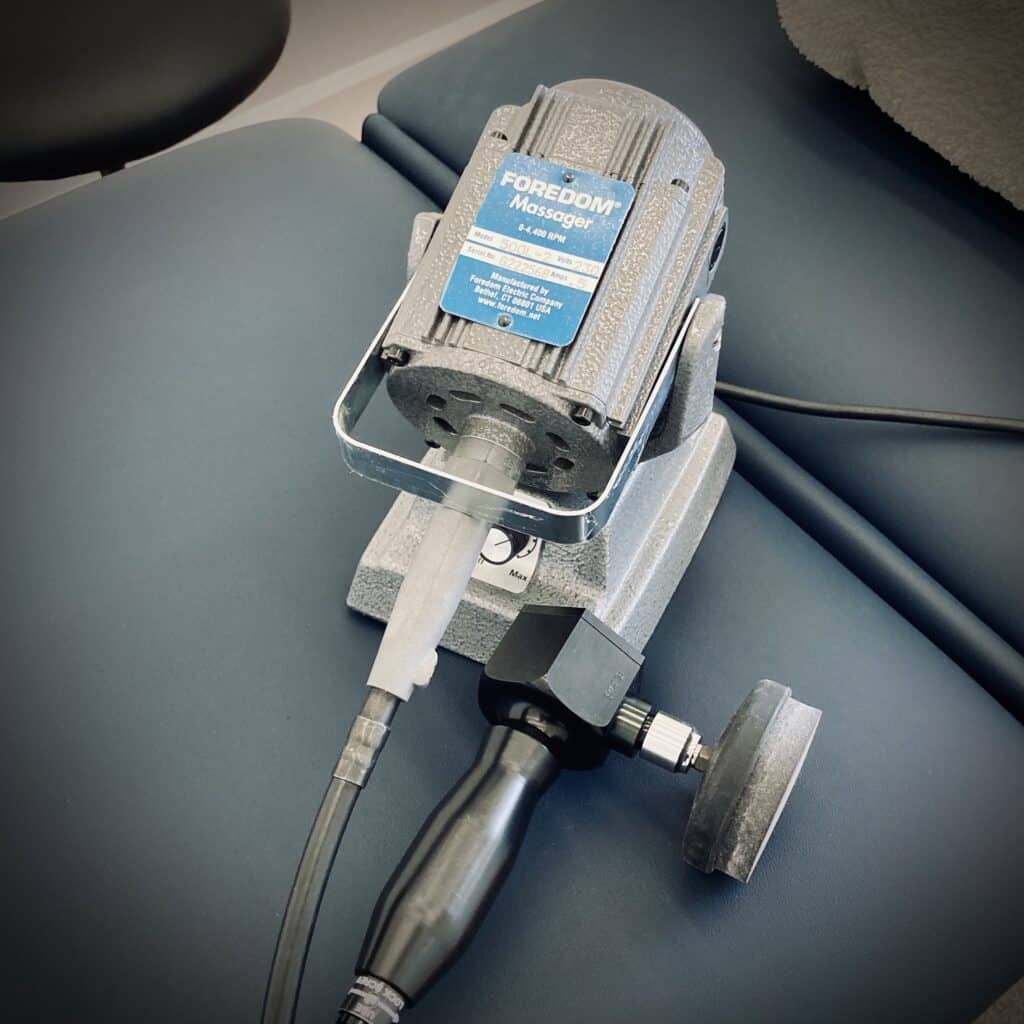
As Dr Fulford aged and his practice demands increased, he sought a way to make his treatments more efficient while maintaining their effectiveness. The percussion vibrator was his solution—a modified dentist’s drill motor with a thick, round metal disk with a comfortable pad that vibrates up and down at adjustable frequencies.
While the technique could theoretically be performed entirely by hand, the percussor allowed Dr Fulford to work with less physical effort while delivering consistent, focused vibrational energy to restricted areas. The device became an extension of his skilled hands, amplifying his ability to detect and release fascial restrictions.
How the Percussor Works
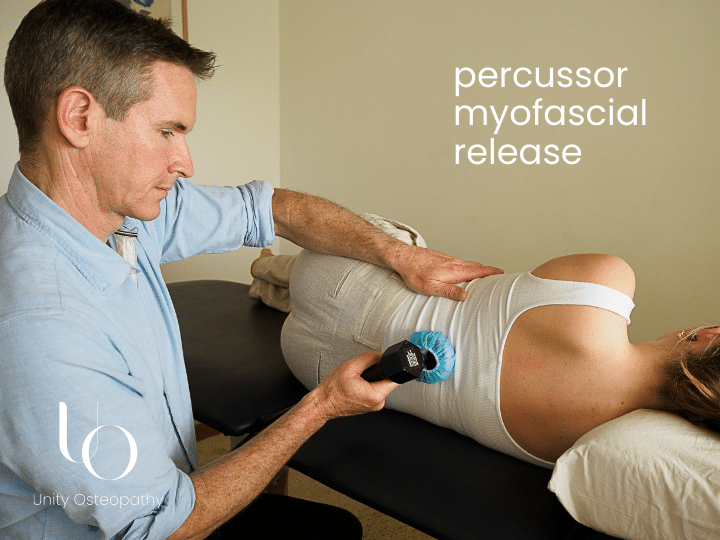
The percussion vibrator generates a rhythmic, vibrational wave that can be focused across body structures to facilitate fascial releases. Dr Fulford would place the vibrating pad on specific areas of the body, often beginning at the shoulder or hip. The vibrations would travel through the tissues, and Dr Fulford’s trained hands could sense when a release occurred—described as a sudden jerk or shift in the tissue.
This approach worked on multiple levels:
- Mechanical: The vibration helps release restrictions in fascia, muscles, and other soft tissues
- Energetic: The rhythmic frequency influences the body’s electromagnetic life field, helping to restore proper energy flow.
- Neurological: The treatment affects the nervous system, helping to release stored trauma patterns.
As Dr Andrew Weil observed after watching Fulford work: “I could feel the vibrations through the whole right side of my body, pleasant and relaxing, but hardly major therapy. After several minutes, Dr Fulford’s hand gave a little jerk, and he muttered, ‘There she goes.'” That subtle moment marked the release of a fascial restriction that might have been present for years.
A Complete Treatment Approach
While the percussion vibrator was a signature element of Dr Fulford’s work, it was only one component of his comprehensive treatment approach. A typical session would include:
- Assessment: Observation of posture, breathing patterns, and movement
- Percussor treatment: Systematic application of the vibration tool to release fascial restrictions
- Cranial osteopathy: Gentle hands-on manipulation of the cranium to restore proper craniosacral rhythm
- Spinal adjustments: Traditional osteopathic manipulation as needed
- Breathing exercises: Custom exercises to support proper respiratory function and maintain treatment results
The Importance of Breath
Dr Fulford placed tremendous emphasis on healthy breathing, viewing it as far more than simple mechanical ventilation. He taught that breath connects each individual to the universe and serves as the foundation of consciousness. Breathing is the only vital function we can consciously control, making it a mediator between mind and body.
He often prescribed specific breathing exercises to his patients, recognising that proper breathing maximises the flow of vital life force in the body. His personal health and vigour at age 80 – when he could take extraordinarily deep breaths that expanded his chest dramatically – served as a testament to this principle.
“The more air you can breathe in and out, the more nourishment you can give to the central nervous system.
Dr Robert Fulford
Good breathing is the key.”
Clinical Applications and Results
Dr Fulford achieved remarkable clinical success with a wide range of conditions. Dr Andrew Weil, who studied with Fulford extensively, documented numerous cases of longstanding problems resolved after just one or two treatment sessions—issues that had not responded to conventional medical care.
Conditions successfully treated included:
- Chronic pain conditions (neck, back, joint pain)
- Digestive disorders, including chronic inflammatory bowel conditions
- Recurrent ear infections in children
- Respiratory conditions, including asthma
- Sleep disorders
- Hormonal imbalances
- Learning disabilities and developmental challenges
- Effects of birth trauma and early childhood injuries
What distinguished Dr Fulford’s approach was his understanding that symptoms in one area often originated from restrictions elsewhere. A knee problem might stem from an old ankle injury. Digestive issues could be traced to cranial restrictions affecting nerve function. This whole-body perspective allowed him to address root causes rather than simply treating symptoms.
The Fulford Legacy in Modern Practice
Dr Fulford continued teaching and treating patients until his death at age 91 in 1997. His influence extended through his students, his presentations at osteopathic conferences, and his service as President of the Cranial Academy in 1974-1975. Even in his final years, he travelled across the U.S. to share his knowledge, inspiring new generations of osteopathic physicians.
Today, osteopathic physicians trained in the Fulford approach continue to use percussion vibrator techniques alongside traditional osteopathic manipulation. The principles Dr Fulford emphasised remain as relevant as ever:
- The body wants to be healthy – Health is the natural condition, requiring less effort than disease
- The body is a whole – All parts are interconnected through fascia, nervous system, and energy fields
- Mind and body are inseparable – Physical interventions affect psychological function and vice versa
- Healing is a natural power – Treatment should support the body’s inherent self-healing mechanisms
Experience Fulford-Inspired Treatment
At Unity Osteopathy, we incorporate Dr Fulford’s principles and techniques into our comprehensive treatment approach. While each patient’s needs are unique, we draw upon the wisdom of pioneers like Dr Fulford to provide care that addresses the whole person—body, mind, and spirit.
Our treatments may include:
- Percussion vibrator therapy for fascial release
- Cranial osteopathy to restore craniosacral rhythm
- Traditional osteopathic manipulation
- Breath work and therapeutic exercises
- Guidance on supporting your body’s healing capacity between sessions
Like Dr Fulford, we believe in working with your body’s natural healing forces rather than against them. We seek to remove restrictions and restore balance, allowing your innate health to express itself fully.
Conclusion
Dr Robert Fulford’s work represents a beautiful synthesis of osteopathic philosophy, hands-on skill, and innovative thinking. His development of the percussion vibrator technique and his holistic understanding of health continue to inspire osteopathic physicians committed to honouring the body’s healing wisdom.
His legacy reminds us that sometimes the gentlest interventions—a subtle release of fascial tension, the restoration of cranial rhythm, the improvement of breath—can have the most profound effects. As Dr Fulford would say, after successful treatment: “I took the shock out of your system. Now just let old Mother Nature do her job.”
Ready to experience the healing benefits of osteopathic treatment?
Contact Unity Osteopathy to schedule your consultation and discover how our whole-person approach can support your health and wellbeing.
References:
Fuller, David B. “Robert C. Fulford, D.O.” The New Philosophy, July-December 2011.
Fulford, Robert C. Dr Fulford’s Touch of Life: The Healing Power of the Natural Life Force. New York: Pocket Books, 1996.
Weil, Andrew. “Right In My Own Backyard.” Chapter from Spontaneous Healing.
Comeaux, Zachary. Robert Fulford, D.O. and the Philosopher Physician. Seattle: Eastland Press, 2002.


